

Products
View All ProductsTrailer Movers
Electric Tugs & Movers
If you need some help choosing a product or would like to book a demo, please get in touch using the link below:
Custom Electric Tugs

Applications
View All Applications
Super Power Pusher pushing metro cars at Helsinki Public Transport maintenance depot.

Power Pusher, with Roller Attachment, for pushing cable drums at Prysmian Cables.

Super Power Pusher, with Steering Arm, moving chemical ISO container into and out of wash bay.
About Us
Looking for a Power Pusher in your area?
Our electric tugs are sold globally through a network of helpful distributors.
News & Updates
Custom attachments for electric tugs: When bespoke couplings are worth the investment
Electric tugs are built to move almost anything, from heavy carts to complex production loads. The key to their flexibility lies in the attachment, the part that connects the tug to the load. For most applications, a standard coupling works perfectly. But when things get more complicated, a custom solution might be the better choice.
What coupling systems do
A coupling system is the link between the tug and the load. It transfers the pulling force safely and efficiently, ensuring smooth, controlled movement. Standard couplings include pins, clamps and tow balls that suit a wide range of trolleys and trailers. However, not every operation runs on standard.
Some workplaces deal with tall, narrow, or uneven loads. Others need to connect and release quickly to keep production lines moving. That’s where bespoke attachments come in, designed around the exact shape, height, and load type you use every day.
When bespoke attachments make sense
Custom couplings can make a huge difference in industries where loads vary or safety is critical. For example, a hospital might need a stainless-steel coupling for hygiene reasons, while a manufacturer might require an adjustable height connection to handle different trolley designs.
The goal is to keep operators safe, reduce strain, and make movement faster. When used correctly, custom attachments often pay for themselves in improved efficiency and reduced downtime.
Cost versus benefit of customisation
Of course, bespoke engineering comes with a price. Custom parts take more design time, testing and certification. They can also affect delivery times and future maintenance costs.
That said, a well-designed attachment can extend the life of your equipment and reduce accidents or damage. It’s about balancing the upfront cost with the long-term benefit to your process.
Questions to ask before you decide
Before investing in a bespoke coupling, it’s worth thinking through a few practical questions:
- Is my load genuinely unique, or would a standard coupling do the job just as well?
- How often will we use this setup, and is it central to daily operations or an occasional requirement?
- Will future servicing or spare parts be affected by using a custom design?
- How easily can the coupling be removed or adjusted if our processes change?
- Could a standard PowerPusher attachment be modified instead of fully redesigned?
- Has the solution been tested for our specific load type, environment and operator setup?
- What kind of safety certification or load testing is included with a bespoke attachment?
- Does the supplier offer ongoing maintenance and support for custom-built parts?
If you are unsure about any of these points, talk to our team. PowerPusher can assess your current setup, review your load types and operating conditions, and help you decide whether a bespoke or standard solution will deliver the best value.
Get in touch with PowerPusher for expert advice on attachments and couplings that fit your operation.
Make an enquiry

Latest Updates
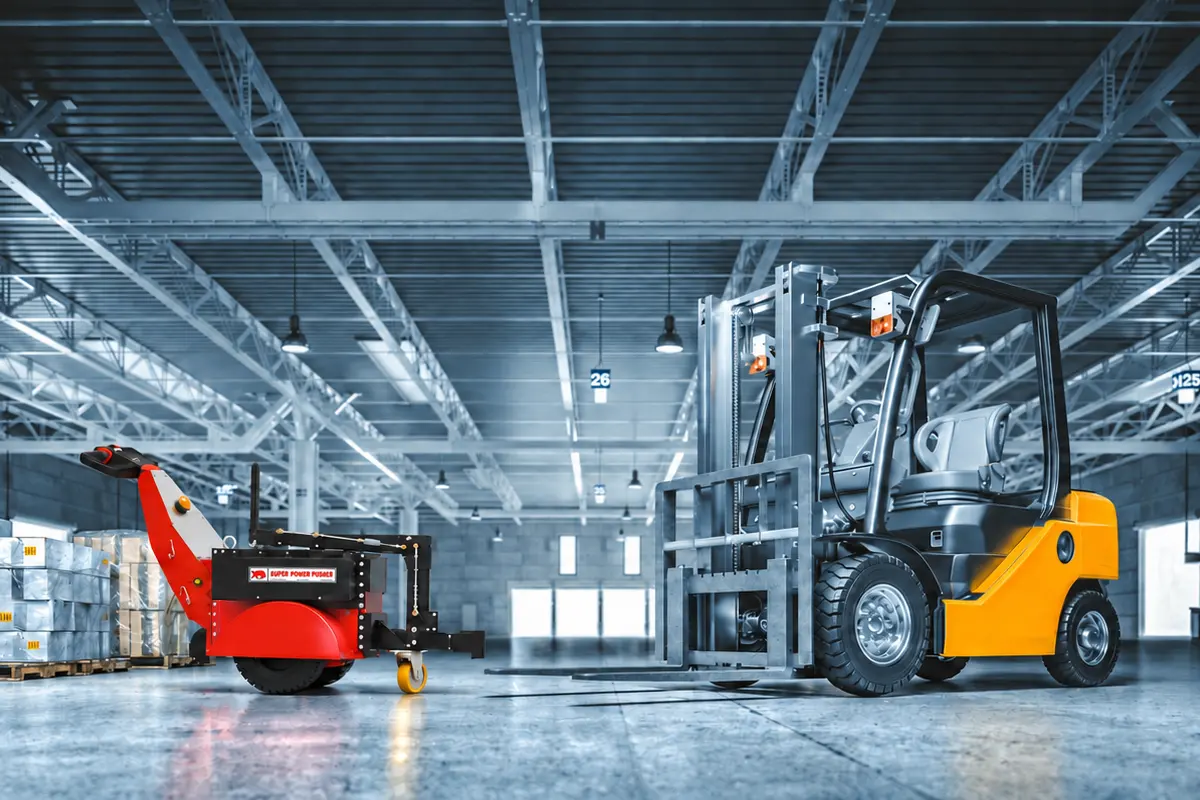
- Power Pusher vs forklift trucks: do you actually need to lift the load?
- Safer Paper Roll Handling in Paper Mills and Corrugator Plants
- Custom Electric Tugs: Tailored Solutions for Unusual Loads
- How the Power Pusher Range Can Support the Defence Industry
- Moving Heavy Loads on Rails Safely: Electric Tug Solutions for Rail Trolleys and Bogies
- Cable Drum & Paper Reel Handling: Safer Moving with Power Pusher Drum Pushers
- Hitachi Energy improves safe movement of production trolleys with the Super Power Pusher
- Material Handling Challenges in Manufacturing Facilities


