

Products
View All ProductsTrailer Movers
Electric Tugs & Movers
If you need some help choosing a product or would like to book a demo, please get in touch using the link below:
Custom Electric Tugs

Applications
View All Applications
Super Power Pusher pushing metro cars at Helsinki Public Transport maintenance depot.

Power Pusher, with Roller Attachment, for pushing cable drums at Prysmian Cables.

Super Power Pusher, with Steering Arm, moving chemical ISO container into and out of wash bay.
About Us
Looking for a Power Pusher in your area?
Our electric tugs are sold globally through a network of helpful distributors.
News & Updates
Cable Drum & Paper Reel Handling: Safer Moving with Power Pusher Drum Pushers
Safer, steadier movement with Power Pusher drum pushers
In cable manufacturing and paper production, drums and reels rarely sit still for long. They’re rolled into winding stations, moved through test areas, shifted along production lines, and parked up in storage or dispatch.
And because they’re round, they often get moved in the most basic way possible: a few people “giving it a shove”, or nudging with whatever’s to hand. It usually works… until it doesn’t. That’s when you see strained backs, trapped fingers, scuffed machine guards, and those near-miss moments where a load starts drifting and everyone suddenly gets very alert.


Power Pusher drum and reel pushers are built for this exact job. It’s a compact, pedestrian-operated electric unit fitted with a roller attachment that can be adjusted to suit different drum and roll diameters, so you can apply controlled force without the lurchy start and stop you get with manual pushing.
Why drums and reels can be awkward (and risky) to move
Unlike palletised loads, drums and reels don’t behave predictably when they start to roll. The main issues tend to be:
- High start-up resistance, followed by sudden movement once the load breaks free
- Run-on momentum, especially on smooth floors or slight slopes
- Pinch and crush zones, particularly around feet, racking, fixed guards and machine edges
The result is often a job that’s physically demanding and harder to do consistently.
Where a drum pusher fits in the process
A Power Pusher is particularly useful when drums and reels need to be moved:
- Through production stages (infeed/outfeed to stations)
- Into wrapping / re-wrap areas
- In and out of test bays or chambers
- Within storage zones where space and clearance matter
Because it’s pedestrian-operated, it also helps in environments where you want tight control and don’t want to introduce larger handling equipment into congested areas.
The technique that makes movement safer and smoother
You don’t need to learn anything complicated. It’s mostly a few good habits, done consistently.
1) Start square and stay square
Approach the drum/reel straight on so the roller makes even contact. If you start at an angle, the load is more likely to drift and you’ll spend time correcting it.
2) Build movement gently
Most problems happen in the first second. Apply force smoothly so the drum/reel starts rolling in a controlled way, rather than lurching forward.
3) Keep a steady, walking pace
A consistent pace makes the load easier to read. If it’s speeding up, you’ve lost the “feel” of it and stopping cleanly becomes harder.
4) Plan your stop early
Ensure you have the chock in position ready to stop your Cable Drum. Rolling loads carry momentum. Aim to ease off before the final position rather than trying to stop sharply at the end.
5) Give the load space
Avoid tight clearances where possible. If there’s a fixed edge, guard, post or racking upright nearby, leave extra margin. Drums and reels don’t always track perfectly even when everything is lined up.
Quick safety checks that prevent most issues
Before a move, it’s worth taking a moment to check:
- The chock is ready in position
- The route is clear (bands, pallet debris, offcuts, wrapping, chocks)
- Floor condition is sensible (wet patches, oil, slopes, joints)
- The drum/reel looks stable and suitable to roll (no obvious damage or obstruction)
- The roller attachment is positioned correctly for the diameter being moved
Choosing a machine for drums vs reels
Power Pusher machines can be configured for cable drums and paper reels across a wide range of sizes. As a guide, typical applications include paper rolls up to 8 tonnes and cable drums up to 60 tonnes, and in some setups two machines can be used together for higher loads where the move and floor conditions allow.
In practice, selection usually depends on:
- The true load weight (including flanges, cores, and any variation between reels)
- Floor surface and gradients (smooth floors and slight slopes change how a load behaves)
- How frequently moves happen (occasional moves vs continuous production flow)
- Drum/reel construction (for example, wooden flanges can behave differently from steel flanges)
The aim is simple: match the machine and roller positioning to the real load and the real route, so the drum or reel starts cleanly, tracks predictably, and can be stopped accurately.
Common mistakes to avoid
A few patterns show up again and again in drum and reel movement:
- Starting at an angle and then “correcting” all the way along
- Trying to go too fast to save time
- Leaving no margin near racking, machine edges, or door frames
- Letting people cross the line of travel because “it’s moving slowly”
- Treating every drum/reel the same when size and build vary day to day
A more controlled way to keep production moving
When drums and reels need shifting all day, small improvements in control make a big difference. A roller-based electric pusher helps reduce manual effort and makes movement more consistent, especially in production areas where space is limited and repeatability matters.
If you’d like advice on the right setup for your drum sizes, floor conditions, and typical routes, we can recommend an appropriate machine and attachment configuration. Please get in touch for more information.
Need Help Moving Cable Drums?
Our engineers can help you select the correct Power Pusher model based on:
• drum weight
• drum diameter
• floor surface
• operating environment
Complete the form below and we will recommend the most suitable solution.
"*" indicates required fields

Latest Updates
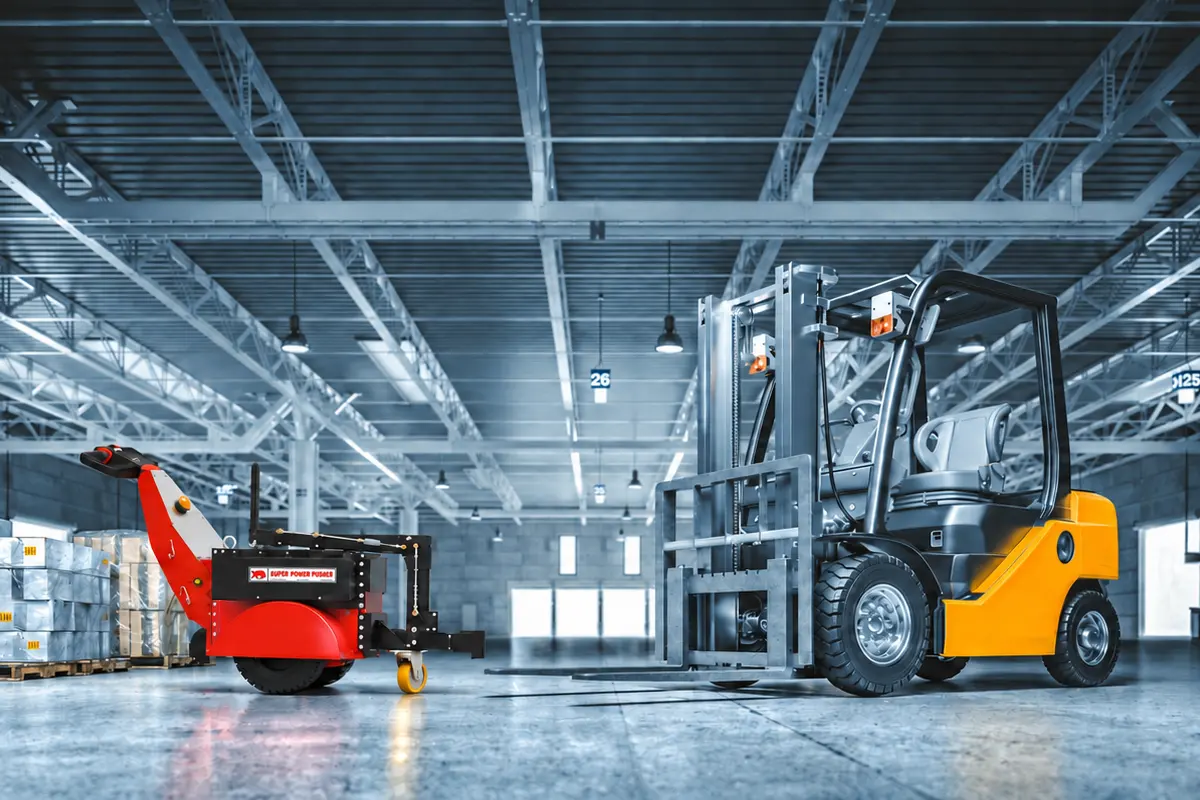
- Power Pusher vs forklift trucks: do you actually need to lift the load?
- Safer Paper Roll Handling in Paper Mills and Corrugator Plants
- Custom Electric Tugs: Tailored Solutions for Unusual Loads
- How the Power Pusher Range Can Support the Defence Industry
- Moving Heavy Loads on Rails Safely: Electric Tug Solutions for Rail Trolleys and Bogies
- Cable Drum & Paper Reel Handling: Safer Moving with Power Pusher Drum Pushers
- Hitachi Energy improves safe movement of production trolleys with the Super Power Pusher
- Material Handling Challenges in Manufacturing Facilities


