

Products
View All ProductsTrailer Movers
Electric Tugs & Movers
If you need some help choosing a product or would like to book a demo, please get in touch using the link below:
Custom Electric Tugs

Applications
View All Applications
Super Power Pusher pushing metro cars at Helsinki Public Transport maintenance depot.

Power Pusher, with Roller Attachment, for pushing cable drums at Prysmian Cables.

Super Power Pusher, with Steering Arm, moving chemical ISO container into and out of wash bay.
About Us
Looking for a Power Pusher in your area?
Our electric tugs are sold globally through a network of helpful distributors.
News & Updates
Power Pusher Ground Support Bagage Mover: How Electric Tuggers Are Transforming GSE Handling
Airports rarely slow down. Even during quiet windows, ground staff are repositioning baggage trailers, passenger stairs, dollies, GPUs and a long list of equipment that keeps the apron functioning. Most airports still rely heavily on diesel tow tractors for these tasks, but a noticeable shift is happening. More operations teams are bringing in compact electric tugs to reduce strain, cut emissions and improve control in tight spaces. One of the systems gaining ground is the Power Pusher range of electric trailer movers.
Recently our equipment was filmed in action at Delhi Airport with Air India SATS, showing how easily a single operator can manoeuvre different types of GSE. For anyone considering electric tuggers or looking to improve safety and efficiency on the ramp, this makes for a great case study.


The footage shows a Power Pusher Trailer Mover towing and positioning heavy trailers in a busy apron environment. There is a lot going on around the operator, yet the movement stays controlled. A few technical points stand out when you watch closely:
- The load stays stable, with no visible wheel scrub or sway.
- The operator adjusts direction with very small inputs, which shows the precision of the control system.
- The working area is narrow, which is exactly where full-size diesel tugs become inefficient or awkward.
- Zero emissions and quiet operation help the operator stay focused without noise fatigue.
Why airports are switching to electric trailer mover
Airports everywhere are dealing with the same pressures. Turnaround times are tight, apron space is limited, diesel costs are high and safety requirements are stricter than ever. Electric movers address several of these issues at once.
1. Improved safety for ground crews
Heavy manual handling remains one of the most common causes of musculoskeletal injuries. An electric tug takes the full load and keeps force consistent, which removes a major risk factor for staff.
2. More precise movement in confined areas
Service roads, hangars and aircraft stands often leave almost no margin for error. Electric movers operate at walking speed with controlled torque, which reduces the likelihood of accidental contact with equipment, aircraft or personnel.
3. Lower long term running costs
Electric units use less energy than diesel tugs and have far fewer components that require regular servicing. There is no requirement for fuel storage and no exhaust systems to maintain.
4. Strong support for sustainability targets
Most airports now report emissions across the entire GSE fleet. Replacing diesel where practical is one of the simplest ways to reduce overall output without changing workflow.
How Delhi Airport is using Power Pusher equipment
Delhi International Airport is one of the largest and busiest gateways in Asia. With so much equipment moving at any given moment, even small efficiency gains make a noticeable difference. The Air India SATS team uses Power Pusher units for several routine but essential tasks:
- Moving baggage trailers between sorting and handling zones
- Positioning passenger stairs during aircraft turnaround
- Shifting dollies and support equipment around restricted access points
- Working in maintenance areas where larger tow tractors cannot manoeuvre effectively
These tasks might seem minor on their own, but across hundreds of movements per day they contribute significantly to smoother operations.
Where electric tugs fit within modern airport operations
Electric trailer movers are not intended to take over every towing job. They fill a middle ground that has always existed between manual labour and large diesel tow tractors. They are most useful in situations that demand accuracy, predictable torque and quiet operation.
Ideal environments include:
- Baggage halls and indoor handling areas
- Engineering workshops
- Remote stands where only small adjustments are needed
- Night operations with reduced staff
- Any location where diesel emissions or noise create limitations
They’re also widely used outside of aviation in manufacturing, logistics centres, NHS facilities, warehouses and industrial plants because the technology is proven, stable and easy for staff to learn.
Why many operators choose Power Pusher
Power Pusher has more than fifty years of experience producing electric load moving solutions. The equipment is known for reliability and straightforward operation. Key advantages include:
- High torque output that allows the tug to handle heavy or uneven loads
- Simple one person operation with short training times
- Durable build quality suitable for demanding industrial environments
- Strong battery performance with uncomplicated charging requirements
- Clear long term value due to lower running and maintenance costs
Consistency is important on the apron. Operators need equipment that behaves the same way every time, regardless of the environment or load. Power Pusher units are designed around that expectation.
See the system working at Delhi Airport
The Delhi Airport video below gives a realistic view of how the equipment performs during a standard shift. It is not polished or staged, which makes it a useful reference for anyone assessing how electric movers fit into a mixed GSE fleet.
Looking to evaluate electric GSE for your operation?
If your airport or engineering team is considering electric tugs, we can help you review which models fit your requirements. We can provide workload assessments, cost comparisons or arrange a demonstration on site.
Please get in touch if you would like to discuss your requirements.
Make an enquiry
Latest Updates
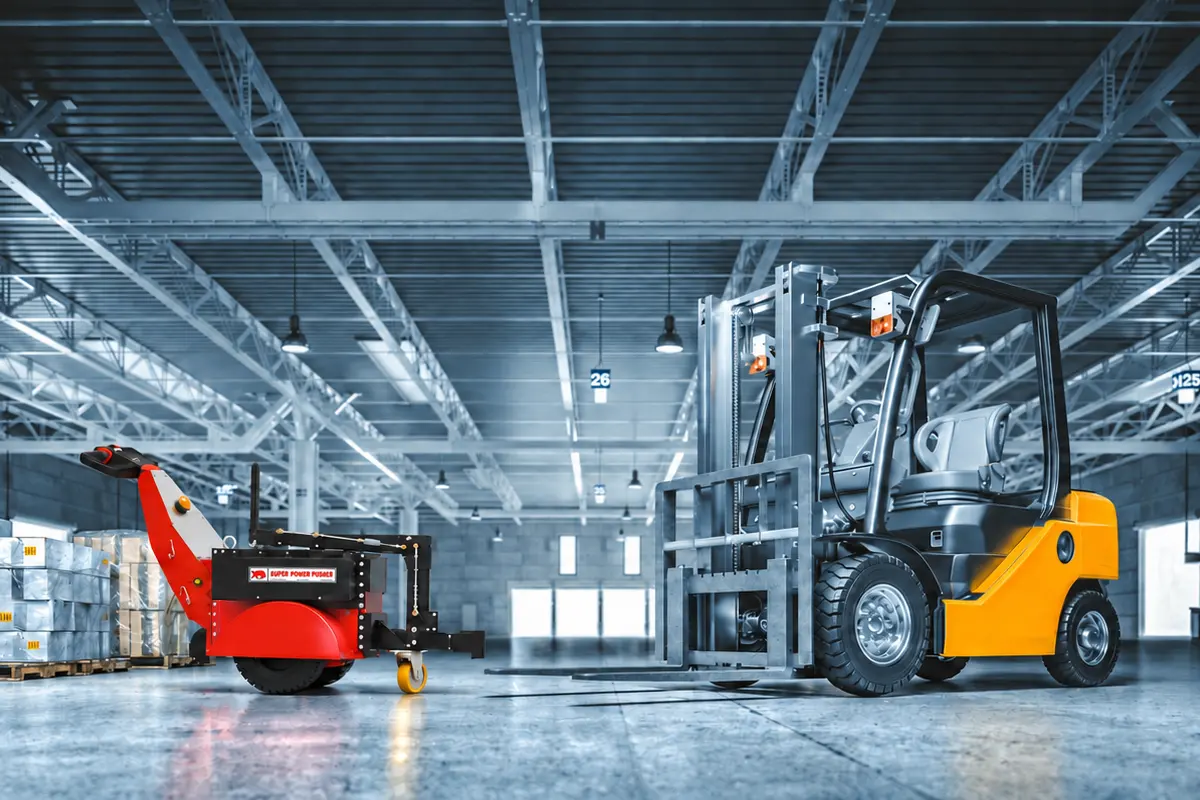
- Power Pusher vs forklift trucks: do you actually need to lift the load?
- Safer Paper Roll Handling in Paper Mills and Corrugator Plants
- Custom Electric Tugs: Tailored Solutions for Unusual Loads
- How the Power Pusher Range Can Support the Defence Industry
- Moving Heavy Loads on Rails Safely: Electric Tug Solutions for Rail Trolleys and Bogies
- Cable Drum & Paper Reel Handling: Safer Moving with Power Pusher Drum Pushers
- Hitachi Energy improves safe movement of production trolleys with the Super Power Pusher
- Material Handling Challenges in Manufacturing Facilities


